Multi-Model Intelligence Workspace
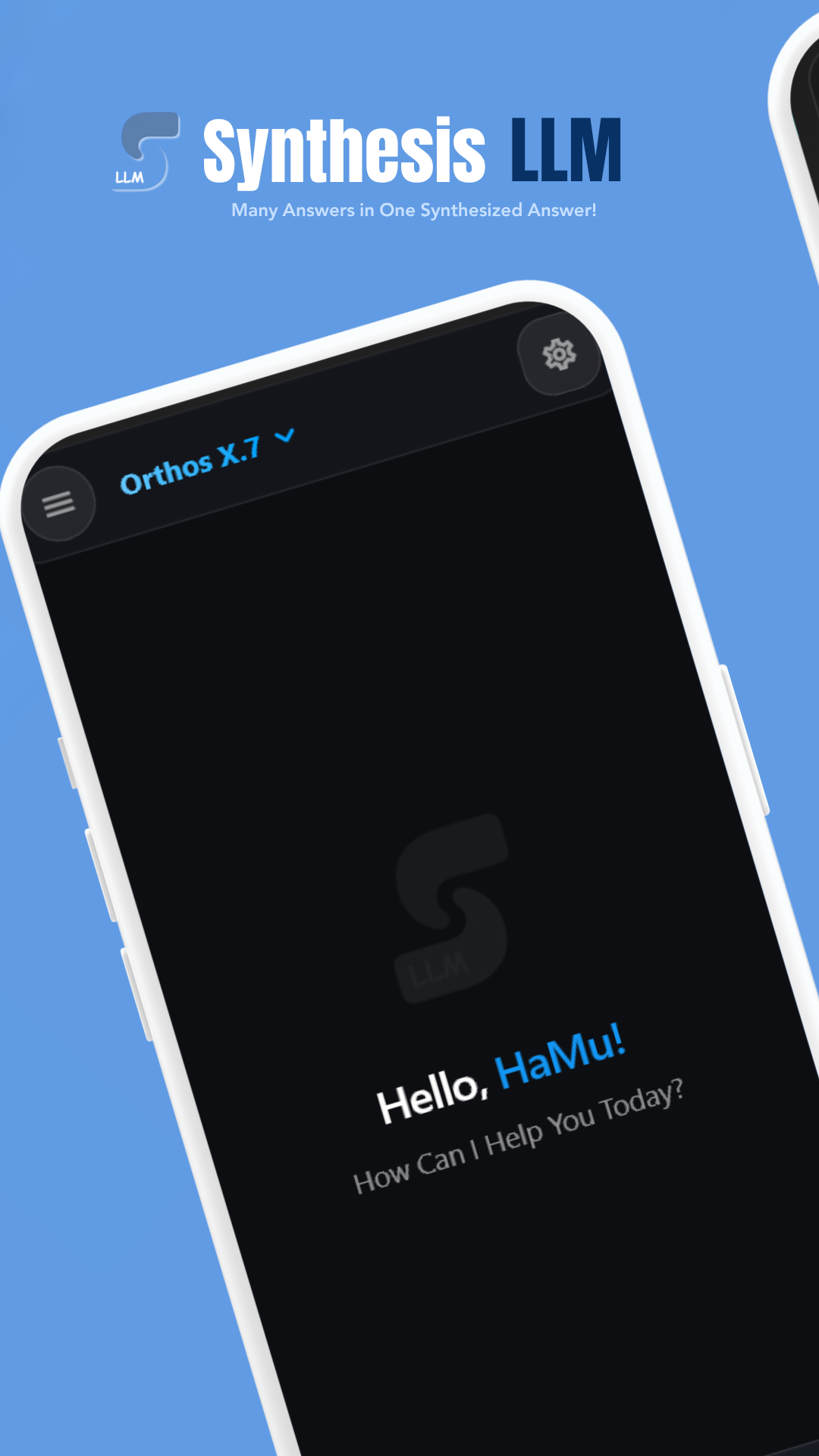
Orchestrate multiple AI models, compare independent perspectives, run multi-agent Round-Tables, and synthesize complex responses from one focused workspace.
Synthesis LLM is designed around the idea that useful AI intelligence can come from comparing different model perspectives rather than depending on a single response.
Send a prompt to multiple configured AI providers in parallel and bring their independent perspectives into one workspace for comparison and synthesis.
Collect outputs from participating models, preserve their individual perspectives, and make it easier to identify common conclusions, unique insights, and conflicting answers.
Dedicated Synthesis LLM reasoning modules intended to process model outputs and turn multiple perspectives into a coherent result within the application's synthesis workflow.
Let multiple AI participants discuss a user-provided question or enter an open discussion mode where participating agents can continue a structured AI-to-AI conversation.
Multiple answers can be viewed as separate perspectives instead of being treated as automatically identical. Agreement, disagreement, alternative reasoning, and uncertainty become easier to inspect.
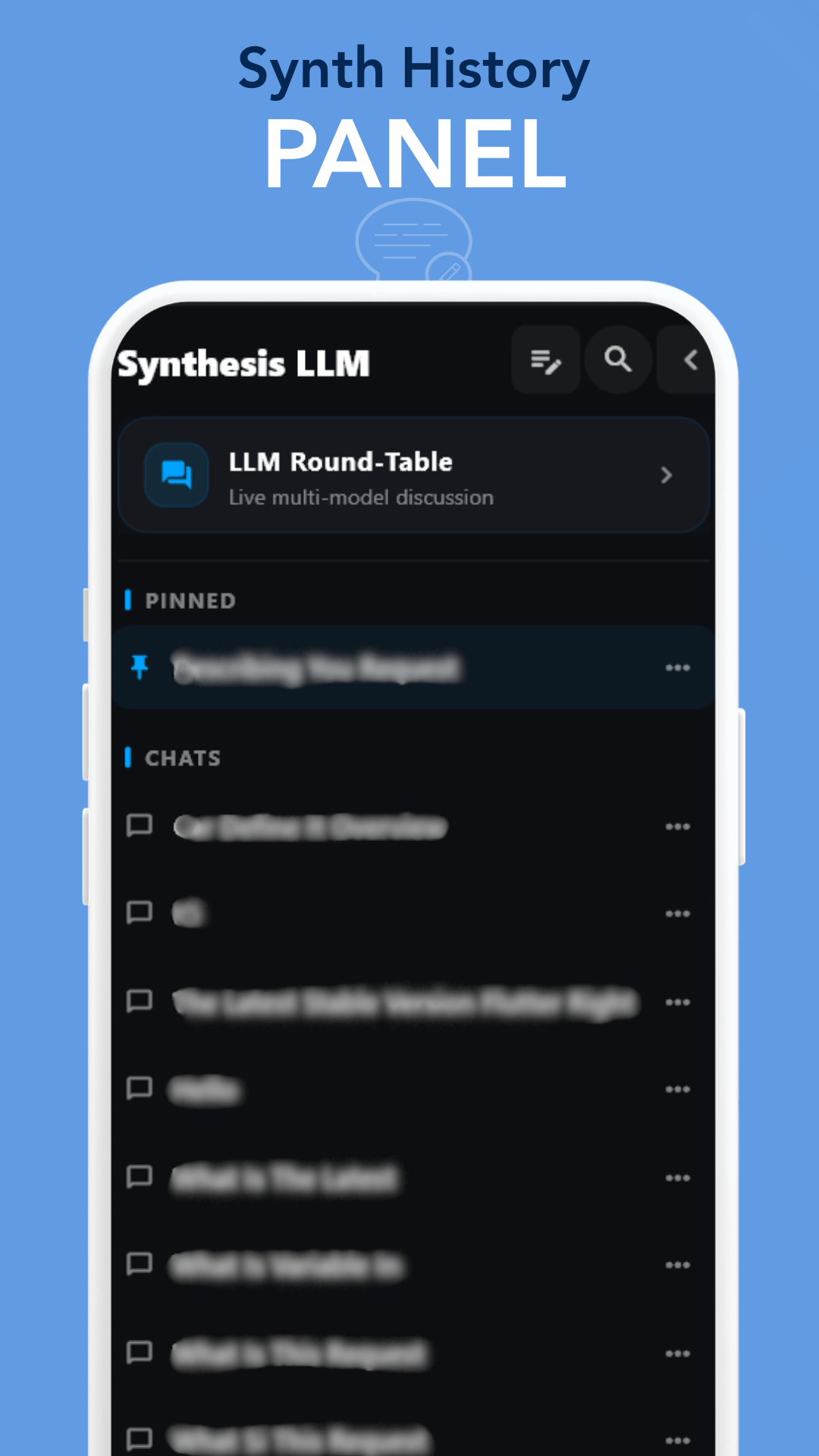
Conversation history, presets, and application data are designed around local storage so the workspace can remain useful without requiring every piece of application data to live remotely.
Export and restore supported application data through portable JSON-based backups, giving users a practical way to preserve or move their workspace.
Configure participating models and AI providers according to the workflow you want to run instead of forcing every task through one fixed model.
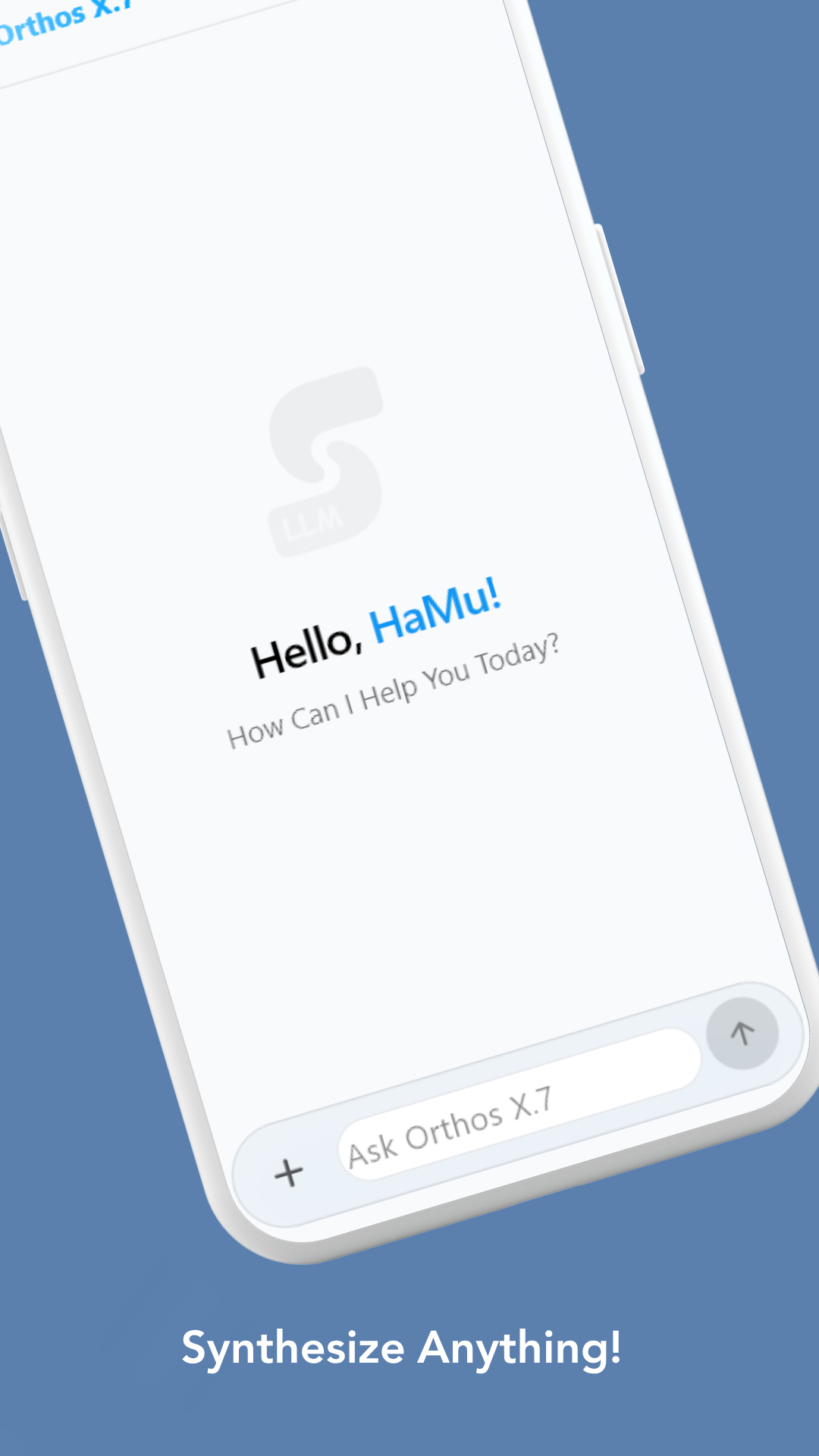
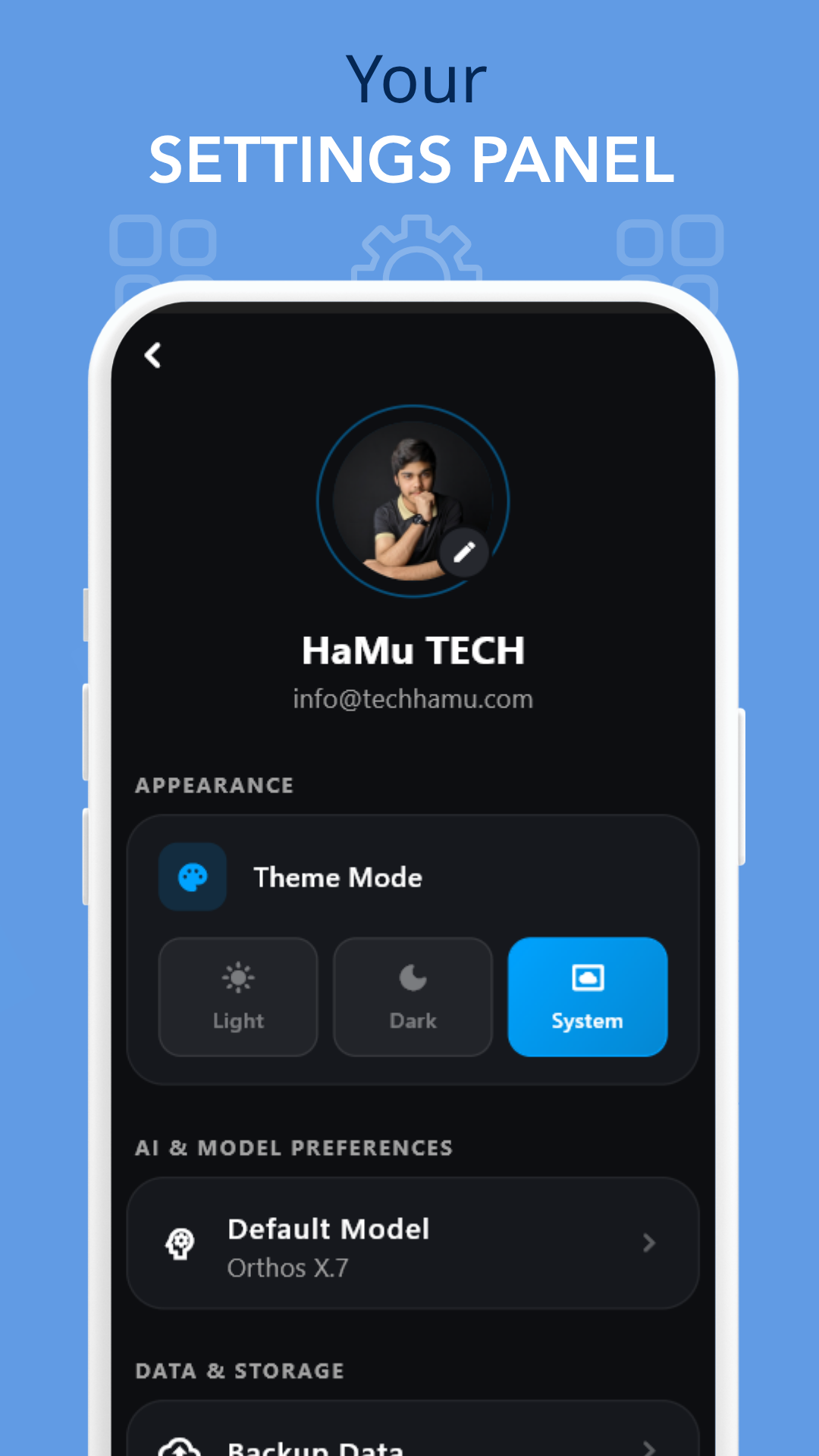
A clean Flutter-based interface keeps model selection, conversations, synthesis workflows, history, settings, and Round-Table experiences inside one mobile workspace.
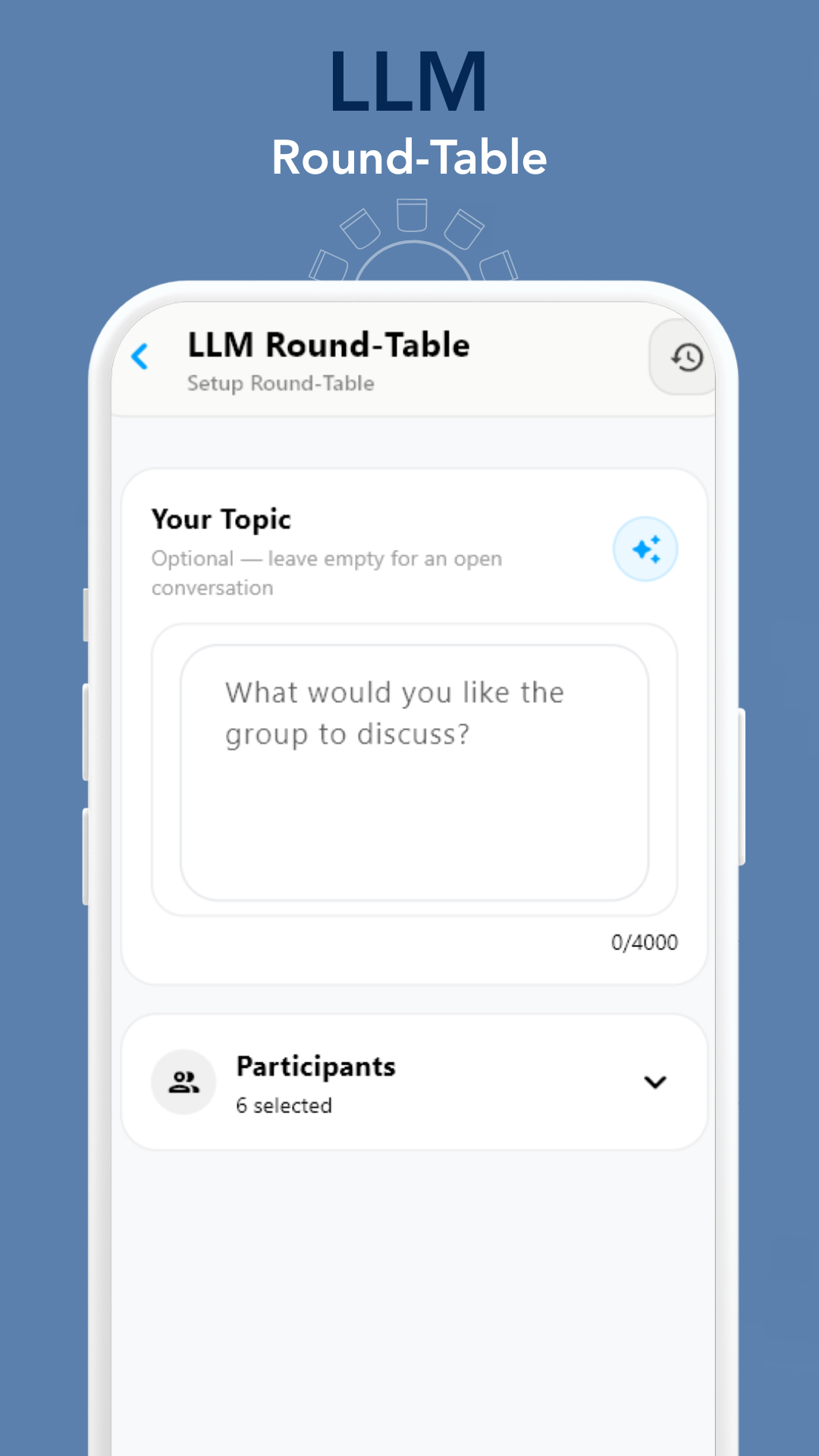
Instead of asking one AI for one answer, create a virtual discussion room where multiple AI participants can examine a topic from different perspectives, respond to one another, challenge ideas, and continue the conversation across multiple turns.
A user supplies a specific question, problem, claim, or topic. Participating models discuss it from their own perspectives instead of simply producing isolated answers.
The user can leave the table open rather than supplying a tightly defined question. Participating agents can generate directions, observations, follow-up questions, and discussion threads to create a more free-form AI conversation.
The core idea is to preserve model diversity first, then process those perspectives into a more useful unified result.
The user submits a question, task, idea, or problem to the selected workflow.
The workspace sends the request to selected AI providers according to the configured model workflow.
Each participating model produces its own interpretation, reasoning, recommendation, or solution.
Outputs can be compared to expose common ground, unique ideas, contradictions, and alternative approaches.
The synthesis layer processes the collected perspectives into a coherent response according to the application's configured workflow.
The user receives a unified response while the underlying multi-model workflow remains conceptually distinct from a single-model answer.
The model matrix represents AI sources and internal reasoning modules configured for the application. Actual availability can vary by provider, API access, model version, and application configuration.
Synthesis LLM is a mobile AI workspace built around multi-model orchestration. Instead of treating one language model as the only source of an answer, the application provides workflows for requesting, comparing, discussing, and synthesizing outputs from multiple AI systems.
The application is organized around independent feature areas and service responsibilities so that model communication, data handling, UI workflows, and synthesis logic can remain separated rather than being tightly coupled to individual screens.
Model requests are routed through configured AI provider integrations. This makes it possible for the workspace to support different models and workflows without requiring the user to switch between separate AI applications for every task.
The Round-Table extends the multi-model concept into a conversational environment where participating agents can receive previous discussion context and contribute to a continuing multi-turn exchange.
Application data such as supported conversation history, settings, presets, and backups can be handled locally according to the application's storage implementation. Local-first storage should not be confused with completely offline access to external hosted AI models.
JSON-based backup and restoration provides a transparent, portable representation for supported application data and gives users a practical route for preserving or transferring their workspace.
Synthesis LLM is designed to keep application data under user control where the local architecture permits. When an external AI provider is used, the request and information necessary for that provider's API call may leave the device according to that provider's terms and the application's configuration.
Combining multiple models can increase diversity of perspectives, but it does not automatically guarantee factual accuracy. Different models can share the same mistake, produce conflicting answers, or reinforce an incorrect conclusion. Synthesis is therefore best understood as an orchestration and reasoning workflow, not an infallibility mechanism.
Building software and technology systems around independent experimentation, practical AI workflows, and user-focused digital tools. Synthesis LLM is an ensemble intelligence platform designed by HaMu Tech.
VISIT TECHHAMU.COMFor deployment questions, model integration, technical feedback, or future platform updates, contact the HaMu Tech team.
Corporate Hub: info@techhamu.com
Lead Engineer: Hamza Mughal (HaMu Tech)